I never thought my starter could do this, but my Easy Sourdough Pancakes have me planning breakfasts ahead and wondering why I waited so long to try them.
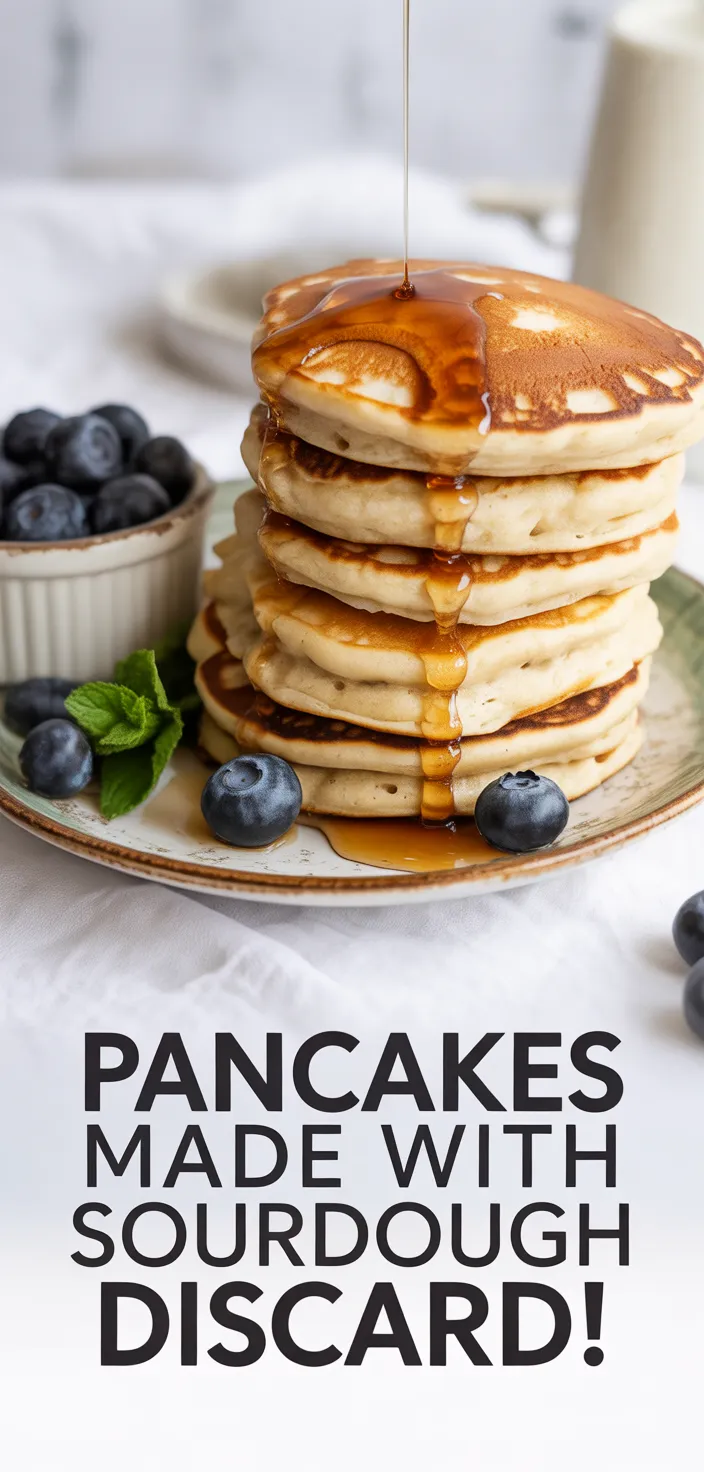
I started testing pancakes with sourdough starter discard because I hated wasting it. What surprised me was how light and springy they turned out with just sourdough starter discard and milk.
I call them my Easy Sourdough Pancakes, though on slow mornings I brag theyre Pancakes From Sourdough Starter. There are a couple little tricks I use that flip the texture from decent to ridiculous, and once you try them you’ll want to make these on repeat.
They’re the kind of breakfast that makes people actually leave their phones and come to the table. Trust me, they’re worth the fuss.
Ingredients

- Gives tangy flavor, mild acidity; some fiber and live yeast, adds depth honestly.
- Main carb source, helps structure via gluten, adds calories and chew.
- Adds moisture, protein and fat; buttermilk gives extra tang and tenderness.
- Provides protein, binds batter, helps lift and gives golden color.
- Sweetens, helps browning and tender crumb, feeds wild yeast slightly.
- Adds richness, mouthfeel and crisp edges; oil gives dairy free option.
- Leaveners for fluff, soda reacts with sour discard to lift fast.
- Tiny amount, boosts aroma and perceived sweetness, masks sour notes.
- Optional flavor, adds warmth or bright citrus, no real nutrition boost.
Ingredient Quantities
- 1 cup sourdough starter discard (about 240 g 100% hydration fed or unfed)
- 1 cup milk (240 ml whole milk or buttermilk)
- 1 large egg lightly beaten
- 2 tablespoons granulated sugar
- 2 tablespoons melted unsalted butter (or neutral oil for dairy free)
- 1 cup all purpose flour (about 125 g)
- 1 teaspoon baking powder
- 1/2 teaspoon baking soda
- 1/2 teaspoon fine salt
- 1 teaspoon vanilla extract
- Optional 1/2 teaspoon ground cinnamon or zest of 1 lemon for flavor
How to Make this
1. In a large bowl stir together 1 cup sourdough starter discard (100% hydration, fed or unfed), 1 cup milk (whole or buttermilk), 1 large lightly beaten egg, 2 tablespoons granulated sugar, 2 tablespoons melted unsalted butter or neutral oil, 1 teaspoon vanilla extract and the optional 1/2 teaspoon ground cinnamon or zest of 1 lemon if using. Mix until mostly smooth, a few small lumps are fine.
2. In a separate bowl whisk 1 cup all purpose flour, 1 teaspoon baking powder, 1/2 teaspoon baking soda and 1/2 teaspoon fine salt so everything is evenly distributed.
3. Pour the dry ingredients into the wet and fold gently until just combined. Dont overmix or you’ll get tough pancakes, a few lumps are okay.
4. Let the batter rest for about 10 to 30 minutes at room temperature; this gives the baking powder a chance to activate and the discard to mellow. If your starter was cold straight from the fridge let it sit closer to 30 minutes.
5. Heat a nonstick skillet or griddle over medium heat and brush or wipe with a little melted butter or oil. Test the heat by sprinkling a few drops of water, they should sizzle and dance.
6. Use about 1/4 cup batter for each pancake and pour onto the hot pan. Cook until bubbles form on the surface and the edges look set, about 2 to 3 minutes, then flip and cook the second side until golden, about 1 to 2 minutes. Dont press down on the pancakes.
7. If theyre browning too fast lower the heat a notch. Keep finished pancakes warm on a baking sheet in a 200 F / 95 C oven while you finish the rest.
8. Quick fixes and tips: if batter is too thick add a tablespoon or two of milk, if too thin add a tablespoon of flour. Make sure your baking powder is fresh or pancakes will be flat.
9. Serve immediately with butter, syrup, fresh fruit or toppings you love. Leftovers keep in the fridge 3 days or freeze up to 2 months; reheat in a toaster, oven or skillet until warmed through.
Equipment Needed
1. Large mixing bowl (for the wet ingredients)
2. Medium bowl (for the dry ingredients)
3. Measuring cups and spoons (1 cup, 1/4 cup, tbsp, tsp)
4. Kitchen scale (optional but handy for flour and starter)
5. Whisk
6. Rubber spatula or wooden spoon for gentle folding
7. Nonstick skillet or griddle
8. Thin metal or silicone turner for flipping
9. Baking sheet and wire rack plus oven to keep pancakes warm at 200 F / 95 C
10. Pastry brush or paper towel to lightly grease the pan
FAQ
PANCAKES Made With Sourdough Discard! Recipe Substitutions and Variations
- Milk (1 cup): swap for 1 cup unsweetened oat or soy milk, works 1:1; or use 3/4 cup plain yogurt plus 1/4 cup water to mimic buttermilk, that extra tang will activate the baking soda and give nicer rise.
- Melted unsalted butter (2 Tbsp): use equal amount neutral oil like canola or vegetable for dairy free, or melted coconut oil for a touch of flavor, same volume as butter.
- All purpose flour (1 cup): try whole wheat pastry or spelt flour 1:1 for nuttier pancakes, or use oat flour 1:1 but expect a denser batter so add 1 to 2 Tbsp extra milk to loosen it.
- Large egg (1): replace with a flax egg (1 Tbsp ground flaxseed + 3 Tbsp water, let sit 5 minutes) for binding, or 1/4 cup mashed banana or 1/4 cup applesauce for moisture and a bit of sweetness.
Pro Tips
1) If your starter just came out the fridge, let the batter sit closer to 30 minutes so it warms up a bit, the leaveners wake up and the flavor mellows. If you rush it the pancakes can turn out a bit dense.
2) Fix consistency by adding milk or flour a tablespoon at a time until it looks right. Use an ice cream scoop or big spoon to portion so all cakes cook the same, makes flipping way easier.
3) Use a bit of butter plus a splash of neutral oil in the pan so you get nice browning without burning. Preheat the pan well, then turn the heat down a notch once the first pancake shows how fast it’s browning.
4) For extra fluff whip the egg white to soft peaks and fold it in last, gently. Add berries or chocolate chips to each pancake after you pour the batter so they dont sink and turn the whole batch wet. Leftovers freeze great between parchment, reheat in a toaster oven for best texture.
PANCAKES Made With Sourdough Discard! Recipe
I never thought my starter could do this, but my Easy Sourdough Pancakes have me planning breakfasts ahead and wondering why I waited so long to try them.
8
servings
177
kcal
Equipment: 1. Large mixing bowl (for the wet ingredients)
2. Medium bowl (for the dry ingredients)
3. Measuring cups and spoons (1 cup, 1/4 cup, tbsp, tsp)
4. Kitchen scale (optional but handy for flour and starter)
5. Whisk
6. Rubber spatula or wooden spoon for gentle folding
7. Nonstick skillet or griddle
8. Thin metal or silicone turner for flipping
9. Baking sheet and wire rack plus oven to keep pancakes warm at 200 F / 95 C
10. Pastry brush or paper towel to lightly grease the pan
Ingredients
1 cup sourdough starter discard (about 240 g 100% hydration fed or unfed)
1 cup milk (240 ml whole milk or buttermilk)
1 large egg lightly beaten
2 tablespoons granulated sugar
2 tablespoons melted unsalted butter (or neutral oil for dairy free)
1 cup all purpose flour (about 125 g)
1 teaspoon baking powder
1/2 teaspoon baking soda
1/2 teaspoon fine salt
1 teaspoon vanilla extract
Optional 1/2 teaspoon ground cinnamon or zest of 1 lemon for flavor
Directions
- In a large bowl stir together 1 cup sourdough starter discard (100% hydration, fed or unfed), 1 cup milk (whole or buttermilk), 1 large lightly beaten egg, 2 tablespoons granulated sugar, 2 tablespoons melted unsalted butter or neutral oil, 1 teaspoon vanilla extract and the optional 1/2 teaspoon ground cinnamon or zest of 1 lemon if using. Mix until mostly smooth, a few small lumps are fine.
- In a separate bowl whisk 1 cup all purpose flour, 1 teaspoon baking powder, 1/2 teaspoon baking soda and 1/2 teaspoon fine salt so everything is evenly distributed.
- Pour the dry ingredients into the wet and fold gently until just combined. Dont overmix or you'll get tough pancakes, a few lumps are okay.
- Let the batter rest for about 10 to 30 minutes at room temperature; this gives the baking powder a chance to activate and the discard to mellow. If your starter was cold straight from the fridge let it sit closer to 30 minutes.
- Heat a nonstick skillet or griddle over medium heat and brush or wipe with a little melted butter or oil. Test the heat by sprinkling a few drops of water, they should sizzle and dance.
- Use about 1/4 cup batter for each pancake and pour onto the hot pan. Cook until bubbles form on the surface and the edges look set, about 2 to 3 minutes, then flip and cook the second side until golden, about 1 to 2 minutes. Dont press down on the pancakes.
- If theyre browning too fast lower the heat a notch. Keep finished pancakes warm on a baking sheet in a 200 F / 95 C oven while you finish the rest.
- Quick fixes and tips: if batter is too thick add a tablespoon or two of milk, if too thin add a tablespoon of flour. Make sure your baking powder is fresh or pancakes will be flat.
- Serve immediately with butter, syrup, fresh fruit or toppings you love. Leftovers keep in the fridge 3 days or freeze up to 2 months; reheat in a toaster, oven or skillet until warmed through.
Notes
- Below you’ll find my best estimate of this recipe’s nutrition facts. Treat the numbers as a guide rather than a rule—great food should nourish both body and spirit. Figures are approximate, and the website owner assumes no liability for any inaccuracies in this recipe.
Nutrition Facts
- Serving Size: 89g
- Total number of serves: 8
- Calories: 177kcal
- Fat: 4.8g
- Saturated Fat: 2.6g
- Trans Fat: 0.06g
- Polyunsaturated: 0.31g
- Monounsaturated: 1g
- Cholesterol: 34mg
- Sodium: 290mg
- Potassium: 85mg
- Carbohydrates: 27.9g
- Fiber: 1g
- Sugar: 4.6g
- Protein: 4.8g
- Vitamin A: 125IU
- Vitamin C: 0.06mg
- Calcium: 45mg
- Iron: 1.6mg