I love how this German buttercream turns simple pantry staples into a silky, rich frosting with just the right touch of sweetness. One spoonful and it is easy to see why it belongs on cakes, cupcakes, and everything in between.
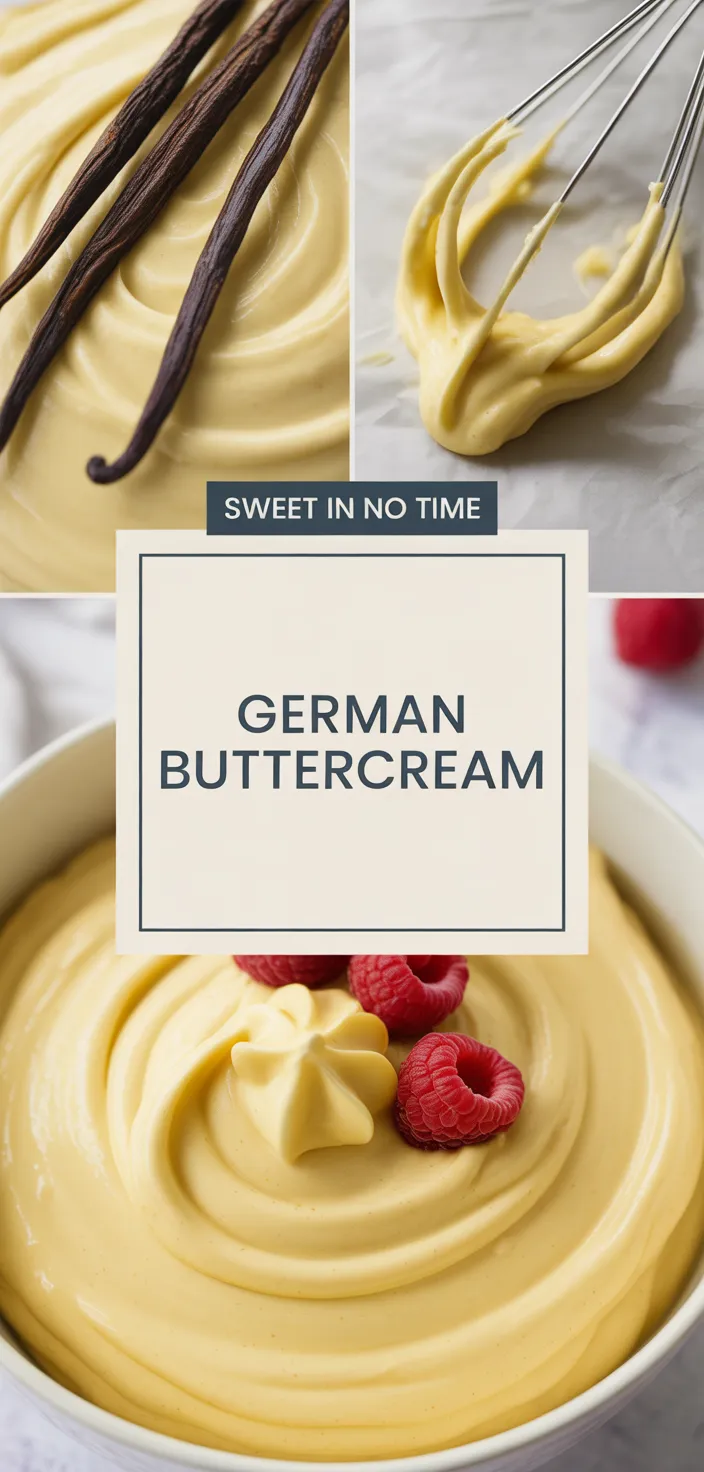
I’m fully obsessed with German buttercream because it gives me that rich, bakery-style frosting without the sugar crash. It’s smooth, silky, and unapologetically buttery, with a custard vibe that makes every swipe taste way more luxurious than basic frosting.
I love how the unsalted butter comes through in the best way, balanced by egg yolks for that creamy, almost pudding-like depth. And it’s not cloying.
That matters. I want frosting I can actually enjoy by the spoonful and still want another bite of cake after.
But this one? Dangerous.
Glossy, lush, and seriously hard to stop tasting.
Ingredients
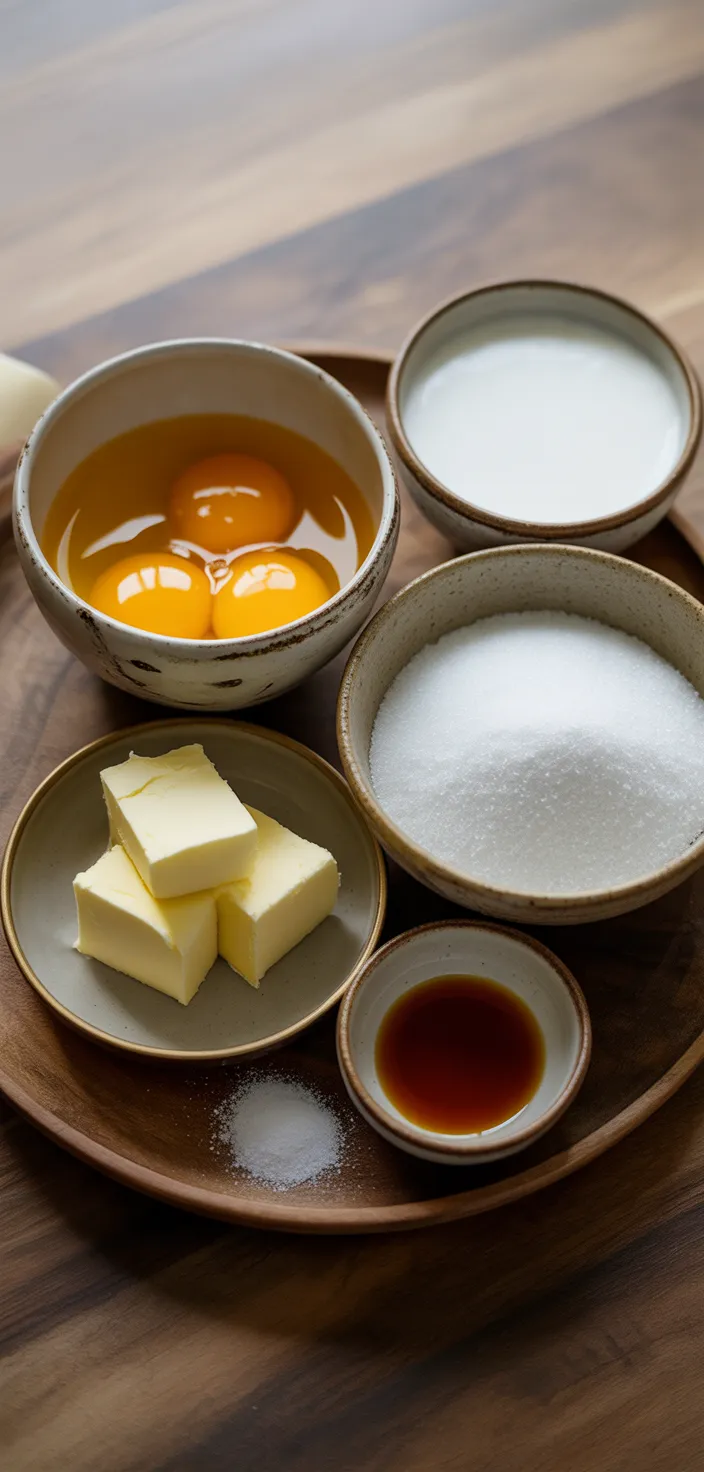
- Whole milk makes the custard creamy and soft, without tasting too heavy.
- Granulated sugar sweetens things cleanly, so the buttercream doesn’t feel bland.
- Egg yolks add richness, color, and that bakery-style custard vibe.
- Cornstarch helps it thicken up, so it’s smooth instead of runny.
- Vanilla brings cozy flavor, basically making everything taste more like dessert.
- Unsalted butter turns the custard silky, fluffy, and spreadable.
The good stuff.
- Fine salt keeps the sweetness in check, so it doesn’t taste flat.
- Powdered sugar is optional, but it’s handy if you want it sweeter.
- Plus, powdered sugar can help the buttercream feel sturdier for piping.
Ingredient Quantities
- 2 cups whole milk
- 1/2 cup granulated sugar
- 3 large egg yolks
- 3 tablespoons cornstarch
- 1 teaspoon vanilla extract
- 12 ounces unsalted butter, room temperature (about 1 1/2 cups or 3 sticks)
- Pinch of fine salt
- Optional: 1/4 to 1/2 cup powdered sugar for extra sweetness or stability
How to Make this
1. Place 2 cups whole milk in a saucepan and heat over medium until it just begins to steam and small bubbles form at the edges; do not boil.
2. In a bowl whisk together 3 large egg yolks, 1/2 cup granulated sugar, and 3 tablespoons cornstarch until smooth and pale.
3. Temper the yolk mixture by slowly pouring about one third of the hot milk into the yolks while whisking constantly to raise their temperature.
4. Pour the tempered yolks back into the saucepan with the remaining milk and return to medium heat.
5. Cook, whisking constantly, until the mixture thickens and comes to a gentle boil; continue cooking and whisking for 30 to 60 seconds to fully activate the cornstarch.
6. Remove from heat and stir in 1 teaspoon vanilla extract. Pour the custard into a bowl, press plastic wrap directly onto the surface to prevent a skin from forming, and cool to room temperature, then chill until cold.
7. While custard cools, beat 12 ounces unsalted butter at room temperature in a stand or hand mixer on medium speed until smooth and pale, about 3 to 5 minutes.
8. With the mixer on low, add the chilled custard to the butter in 3 to 4 additions, beating until smooth and fully incorporated between additions. If the mixture looks curdled, keep mixing; it will come together.
9. Add a pinch of fine salt and, if desired, 1/4 to 1/2 cup powdered sugar for extra sweetness or stability; beat until light and fluffy.
10. Use immediately to frost cakes or cupcakes, or refrigerate until needed; bring to spreadable consistency by briefly beating at room temperature before using.
Equipment Needed
1. Medium saucepan
2. Heatproof mixing bowl
3. Whisk
4. Rubber or silicone spatula
5. Measuring cups and spoons
6. Stand mixer or electric hand mixer with paddle attachment
7. Plastic wrap (to press onto custard surface)
8. Fine mesh sieve (optional, for extra-smooth custard)
FAQ
German Buttercream Recipe Substitutions and Variations
- Whole milk: use 1 part heavy cream plus 1 part skim or 2% milk for a richer custard, or use full fat canned evaporated milk 1:1 for similar body.
- Egg yolks: use 4 pasteurized liquid egg yolks or 3 whole eggs plus reduce the milk by about 1/4 cup and strain for texture; note whole eggs will lighten texture slightly.
- Cornstarch: substitute equal amount of arrowroot or tapioca starch for similar thickening; for all purpose flour use 2 times the amount and cook a bit longer to remove raw taste.
- Unsalted butter: swap for European style butter for more flavor, or use half butter half neutral-tasting vegetable shortening for greater stability in warm conditions.
Pro Tips
– Bring the milk almost to a simmer but not boiling. If it boils you risk a cooked milk flavor and tiny skin formation; gentle steaming gives the best silkiness.
– Strain the cooked custard through a fine mesh into a bowl before chilling. That removes any tiny cooked egg bits and guarantees a perfectly smooth filling for the buttercream.
– Make sure the butter is truly room temperature: soft enough to yield when pressed but not greasy or melted. If it is too warm the frosting will be loose; if too cold it will be lumpy.
– If the buttercream looks curdled when you add the custard, keep beating at medium speed. Give it a few minutes and it will come together. If it still struggles, chill briefly for 10 to 15 minutes then re-beat.
– For extra stability and flavor balance, use the optional powdered sugar at the lower end for taste or the higher end for stiffer piping. A splash of citrus zest or a pinch of flaky salt on finished cakes brightens the sweetness.
German Buttercream Recipe
I love how this German buttercream turns simple pantry staples into a silky, rich frosting with just the right touch of sweetness. One spoonful and it is easy to see why it belongs on cakes, cupcakes, and everything in between.
12
servings
282.8
kcal
Equipment: 1. Medium saucepan
2. Heatproof mixing bowl
3. Whisk
4. Rubber or silicone spatula
5. Measuring cups and spoons
6. Stand mixer or electric hand mixer with paddle attachment
7. Plastic wrap (to press onto custard surface)
8. Fine mesh sieve (optional, for extra-smooth custard)
Ingredients
2 cups whole milk
1/2 cup granulated sugar
3 large egg yolks
3 tablespoons cornstarch
1 teaspoon vanilla extract
12 ounces unsalted butter, room temperature (about 1 1/2 cups or 3 sticks)
Pinch of fine salt
Optional: 1/4 to 1/2 cup powdered sugar for extra sweetness or stability
Directions
- Place 2 cups whole milk in a saucepan and heat over medium until it just begins to steam and small bubbles form at the edges; do not boil.
- In a bowl whisk together 3 large egg yolks, 1/2 cup granulated sugar, and 3 tablespoons cornstarch until smooth and pale.
- Temper the yolk mixture by slowly pouring about one third of the hot milk into the yolks while whisking constantly to raise their temperature.
- Pour the tempered yolks back into the saucepan with the remaining milk and return to medium heat.
- Cook, whisking constantly, until the mixture thickens and comes to a gentle boil; continue cooking and whisking for 30 to 60 seconds to fully activate the cornstarch.
- Remove from heat and stir in 1 teaspoon vanilla extract. Pour the custard into a bowl, press plastic wrap directly onto the surface to prevent a skin from forming, and cool to room temperature, then chill until cold.
- While custard cools, beat 12 ounces unsalted butter at room temperature in a stand or hand mixer on medium speed until smooth and pale, about 3 to 5 minutes.
- With the mixer on low, add the chilled custard to the butter in 3 to 4 additions, beating until smooth and fully incorporated between additions. If the mixture looks curdled, keep mixing; it will come together.
- Add a pinch of fine salt and, if desired, 1/4 to 1/2 cup powdered sugar for extra sweetness or stability; beat until light and fluffy.
- Use immediately to frost cakes or cupcakes, or refrigerate until needed; bring to spreadable consistency by briefly beating at room temperature before using.
Notes
- Below you’ll find my best estimate of this recipe’s nutrition facts. Treat the numbers as a guide rather than a rule—great food should nourish both body and spirit. Figures are approximate, and the website owner assumes no liability for any inaccuracies in this recipe.
Nutrition Facts
- Serving Size: 83.9g
- Total number of serves: 12
- Calories: 282.8kcal
- Fat: 25.4g
- Saturated Fat: 15.6g
- Trans Fat: 0.25g
- Polyunsaturated: 0.25g
- Monounsaturated: 7.5g
- Cholesterol: 111.2mg
- Sodium: 21.4mg
- Potassium: 72.3mg
- Carbohydrates: 12.3g
- Fiber: 0g
- Sugar: 10.3g
- Protein: 2.1g
- Vitamin A: 333IU
- Vitamin C: 0mg
- Calcium: 57mg
- Iron: 0.17mg