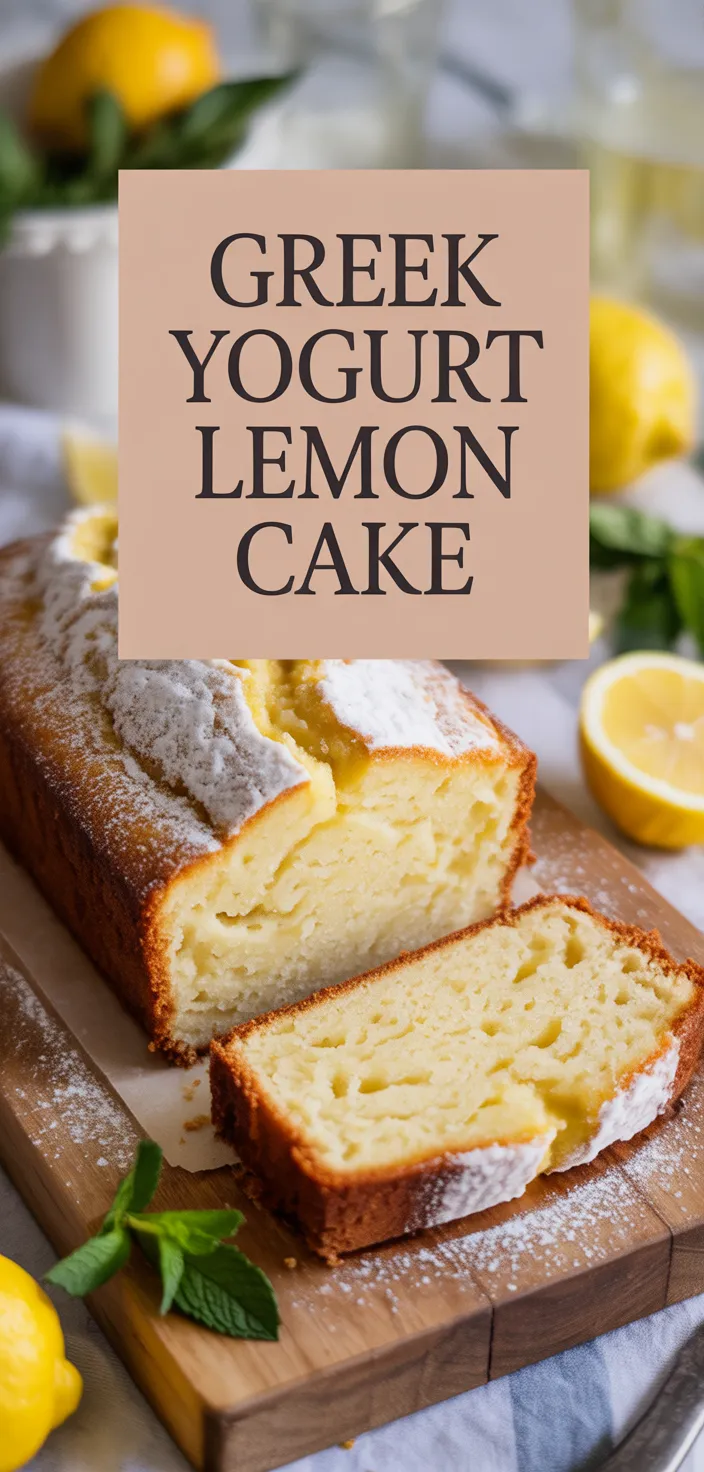
I made a Greek Lemon Dessert that’s absurdly bright and pillowy and will make your favorite bakery look lazy.
On Saturday morning I woke up at 4am. I mean, me.
Aspen and Bluebelle were still asleep and I couldn’t shake the idea of a bright, tangy loaf I’m obsessed with. I adore how Using Yogurt In Recipes turns a simple batter into something dense but light, and this one tastes like a proper Greek Lemon Dessert without being fussy.
I love the punch from lemon zest and the creamy tang of plain Greek yogurt, so honest and loud. But mostly I just crave that flaky glaze and how each slice feels like an argument I can’t win right now.
Ingredients
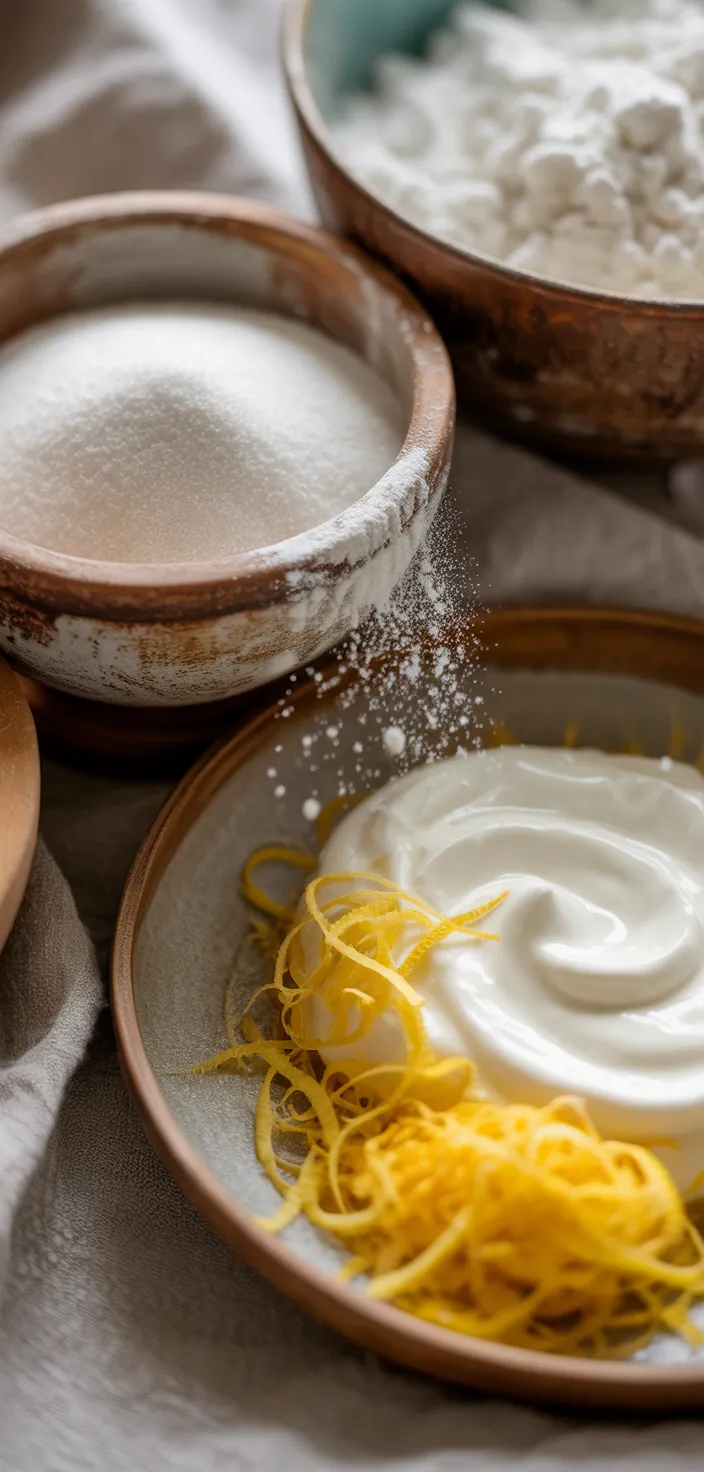
- All purpose flour: the cake’s body, gives structure and soft crumb.
- Baking powder: wakes the batter up, makes it light and springy.
- Baking soda: helps rise and browns the crust a bit.
- Salt: tames sweetness, makes flavors pop without being salty.
- Granulated sugar: sweetens and gives that tender, slightly crisp top.
- Greek yogurt: adds protein, tang, and keeps cake moist.
- Eggs: bind everything together and give some lift and richness.
- Olive or veg oil: keeps it tender and stays moist the next day.
- Lemon zest: bright citrus punch, fragrant and fresh in every bite.
- Fresh lemon juice: brings sharp tang and real lemon clarity.
- Vanilla extract: smooths edges, makes the lemon feel homey.
- Milk (optional): thins batter if needed, makes batter easier to pour.
- Glaze: powdered sugar plus lemon juice makes shiny, tangy finish.
Ingredient Quantities
- 1 3/4 cups all purpose flour
- 1 teaspoon baking powder
- 1/2 teaspoon baking soda
- 1/4 teaspoon salt
- 3/4 cup granulated sugar
- 1 cup plain Greek yogurt (full fat or 2%)
- 2 large eggs, room temp
- 1/3 cup olive oil or mild vegetable oil
- 2 tablespoons lemon zest (from about 2 lemons)
- 1/4 cup fresh lemon juice (about 1-2 lemons)
- 1 teaspoon vanilla extract
- 2 tablespoons milk (optional, if batter seems thick)
- For the glaze: 3/4 cup powdered sugar and 2 to 3 tablespoons fresh lemon juice
How to Make this
1. Preheat oven to 350°F (175°C). Grease and line a 9×5 inch loaf pan with parchment, leaving an overhang to lift the cake out easy.
2. In a medium bowl whisk together 1 3/4 cups all purpose flour, 1 teaspoon baking powder, 1/2 teaspoon baking soda and 1/4 teaspoon salt. Set aside.
3. In a large bowl beat 3/4 cup granulated sugar with 2 large room temp eggs until pale and a little fluffy, about 1 to 2 minutes by hand or 30 seconds with a mixer.
4. Stir in 1 cup plain Greek yogurt, 1/3 cup olive oil (or mild vegetable oil), 1 teaspoon vanilla extract, 2 tablespoons lemon zest and 1/4 cup fresh lemon juice. Mix until combined; it will be thick but smooth.
5. Fold the dry ingredients into the wet mixture gently until just combined. Don’t overmix or the cake gets dense. If batter seems too thick, stir in up to 2 tablespoons milk to loosen.
6. Scrape batter into the prepared loaf pan, smooth the top and tap the pan once on the counter to remove big air bubbles.
7. Bake in the center of the oven for 45 to 55 minutes, until the top is golden and a toothpick inserted in the center comes out with a few moist crumbs but not batter. If the top browns too fast, tent with foil.
8. Cool the loaf in the pan for 10 minutes, then lift out using the parchment and transfer to a wire rack to cool completely before glazing.
9. Make the glaze by whisking 3/4 cup powdered sugar with 2 to 3 tablespoons fresh lemon juice until smooth and pourable. Start with 2 tablespoons and add more if you want it thinner.
10. Drizzle the glaze over the cooled loaf, let it set for 15 minutes, then slice and serve. Store leftovers covered at room temp for 2 days or in the fridge for up to 5 days.
Equipment Needed
1. 9×5 inch loaf pan, greased and lined with parchment (leave an overhang so you can lift the cake out easy)
2. Mixing bowls, one large and one medium (they don’t have to match)
3. Whisk and wooden spoon or spatula for mixing and folding
4. Electric mixer or hand whisk (mixer speeds up step 3 but a whisk works fine)
5. Microplane or fine grater for the lemon zest
6. Measuring cups and spoons for dry and wet ingredients
7. Rubber spatula or bench scraper to scrape batter into the pan
8. Wire cooling rack for cooling the loaf before glazing
FAQ
Healthy Greek Yogurt Lemon Loaf Cake Recipe Substitutions and Variations
- All purpose flour: substitute up to half with whole wheat pastry flour for more fiber and a nuttier flavor, or use a 1-to-1 gluten free baking blend if you need it fully gluten free. Expect a slightly denser loaf with whole wheat, so don’t overmix.
- Plain Greek yogurt: sour cream works great in equal amount, or use buttermilk (use 3/4 cup buttermilk plus 1/4 cup oil or melted butter to keep batter texture similar).
- Olive oil or mild vegetable oil: melted butter adds richer flavor, use same volume; unsweetened applesauce can replace up to half the oil to cut fat and calories, but the crumb will be a bit more tender and moist.
- Granulated sugar: swap in honey or maple syrup but reduce liquid elsewhere. Use about 2/3 cup honey or maple syrup for 3/4 cup sugar and cut other liquids by 2 to 3 tablespoons. If using liquid sweeteners, batter may brown faster so lower oven temp by 15°F and watch closely.
Pro Tips
1) Let the eggs and yogurt come to room temp. Cold eggs make the batter seize and you wont get that light fluffy crumb. If you’re short on time, set eggs in warm water for 5 minutes.
2) Measure the flour right: spoon it into the cup and level with a knife. Dumping or scooping can pack it and you’ll end up with a dry, dense loaf. Also, fold the dry mix in gently and stop as soon as you can’t see streaks of flour or you’ll toughen the cake.
3) Zest before juicing the lemons so you don’t waste any zest. Use only the yellow part, not the bitter white pith. If the batter looks too thick, add the milk 1 teaspoon at a time till it flows a bit, but dont overdo it.
4) Cool completely before glazing. Warm cake will melt the glaze and make it run off. If the top browns too fast while baking, cover loosely with foil the last 15 minutes. Use the parchment overhang to lift it out cleanly when it’s done.
Healthy Greek Yogurt Lemon Loaf Cake Recipe
I made a Greek Lemon Dessert that’s absurdly bright and pillowy and will make your favorite bakery look lazy.
8
servings
345
kcal
Equipment: 1. 9×5 inch loaf pan, greased and lined with parchment (leave an overhang so you can lift the cake out easy)
2. Mixing bowls, one large and one medium (they don’t have to match)
3. Whisk and wooden spoon or spatula for mixing and folding
4. Electric mixer or hand whisk (mixer speeds up step 3 but a whisk works fine)
5. Microplane or fine grater for the lemon zest
6. Measuring cups and spoons for dry and wet ingredients
7. Rubber spatula or bench scraper to scrape batter into the pan
8. Wire cooling rack for cooling the loaf before glazing
Ingredients
1 3/4 cups all purpose flour
1 teaspoon baking powder
1/2 teaspoon baking soda
1/4 teaspoon salt
3/4 cup granulated sugar
1 cup plain Greek yogurt (full fat or 2%)
2 large eggs, room temp
1/3 cup olive oil or mild vegetable oil
2 tablespoons lemon zest (from about 2 lemons)
1/4 cup fresh lemon juice (about 1-2 lemons)
1 teaspoon vanilla extract
2 tablespoons milk (optional, if batter seems thick)
For the glaze: 3/4 cup powdered sugar and 2 to 3 tablespoons fresh lemon juice
Directions
- Preheat oven to 350°F (175°C). Grease and line a 9×5 inch loaf pan with parchment, leaving an overhang to lift the cake out easy.
- In a medium bowl whisk together 1 3/4 cups all purpose flour, 1 teaspoon baking powder, 1/2 teaspoon baking soda and 1/4 teaspoon salt. Set aside.
- In a large bowl beat 3/4 cup granulated sugar with 2 large room temp eggs until pale and a little fluffy, about 1 to 2 minutes by hand or 30 seconds with a mixer.
- Stir in 1 cup plain Greek yogurt, 1/3 cup olive oil (or mild vegetable oil), 1 teaspoon vanilla extract, 2 tablespoons lemon zest and 1/4 cup fresh lemon juice. Mix until combined; it will be thick but smooth.
- Fold the dry ingredients into the wet mixture gently until just combined. Don't overmix or the cake gets dense. If batter seems too thick, stir in up to 2 tablespoons milk to loosen.
- Scrape batter into the prepared loaf pan, smooth the top and tap the pan once on the counter to remove big air bubbles.
- Bake in the center of the oven for 45 to 55 minutes, until the top is golden and a toothpick inserted in the center comes out with a few moist crumbs but not batter. If the top browns too fast, tent with foil.
- Cool the loaf in the pan for 10 minutes, then lift out using the parchment and transfer to a wire rack to cool completely before glazing.
- Make the glaze by whisking 3/4 cup powdered sugar with 2 to 3 tablespoons fresh lemon juice until smooth and pourable. Start with 2 tablespoons and add more if you want it thinner.
- Drizzle the glaze over the cooled loaf, let it set for 15 minutes, then slice and serve. Store leftovers covered at room temp for 2 days or in the fridge for up to 5 days.
Notes
- Below you’ll find my best estimate of this recipe’s nutrition facts. Treat the numbers as a guide rather than a rule—great food should nourish both body and spirit. Figures are approximate, and the website owner assumes no liability for any inaccuracies in this recipe.
Nutrition Facts
- Serving Size: 120g
- Total number of serves: 8
- Calories: 345kcal
- Fat: 13.4g
- Saturated Fat: 3.6g
- Trans Fat: 0.01g
- Polyunsaturated: 1.25g
- Monounsaturated: 6.9g
- Cholesterol: 50mg
- Sodium: 237mg
- Potassium: 83mg
- Carbohydrates: 51.3g
- Fiber: 1g
- Sugar: 31.4g
- Protein: 6.6g
- Vitamin A: 50IU
- Vitamin C: 6.3mg
- Calcium: 45mg
- Iron: 0.49mg